Currently Empty: $0.00

It’s 7:02am. Before the kettle’s even boiled, your baby is already awake and already grizzling, already reaching for whatever closest to yhe baby, which today happens to be your phone charger. Not ideal. So begins another Saturday in a house with a baby in it and another quiet reminder that whatever baby toys are currently scattered around your lounge room clearly aren’t cutting it anymore.
This is the story of one Aussie families Saturday – a real kind of Saturday, the kind most Sydney parents will recognise instantly and what actually happened when they finally sorted out what to buy, what to skip and why it mattered more than they expected.
Table of Contents
7:45am: The Charger Incident
By quarter to eight, the phone charger has been confiscated twice, gnawed on once and thrown at the dog. Mum looks at Dad. Dad looks at the pile of toys under the coffee table – a rattle that’s lost its appeal, a soft giraffe that’s seen better days and a stacking cup set that’s missing two cups. Nothing’s holding attention anymore.
“We need new toys,” she says slightly desperate tone every parent knows. Not because the baby needs entertaining every waking second but because at nine months old, this little human is reaching, grabbing, banging and testing the world in a completely different way than she was even six weeks ago. The old toys were built for a baby who couldn’t yet sit up unassisted. That baby doesn’t exist anymore.
It’s a strange thing, watching a baby outgrow toys almost as fast as they outgrow onesies. One month a rattle is the most exciting object on the planet; the next, it’s being flung aside for something with more texture, more resistance, more of a challenge. Nobody warns you how often you’ll need to reassess what’s actually in the toy basket, or how quickly “perfect for her age” turns into “she’s bored of that now.”
The Drive to Merrylands
They’d heard about a local place from another mum at the school pick-up line – a family-run shop in Merrylands, NSW, that apparently didn’t just sell the same mass-produced stuff you’d find in a supermarket. So instead of scrolling through endless online listings with no real way to compare them, they loaded the baby into the car and drove over.
On the way, Dad pulled up Dreamland For Kids’ guide to the best toys for kids of all ages on his phone at a red light. There’s a whole section here just for infants, he said. “Apparently the trick isn’t buying more – it’s buying the right stuff for right now.”
The Baby Toys Aisle at Dreamland For Kids

Walking into the store, the first thing that struck them wasn’t a wall of flashing, battery-powered gadgets, it was how organised everything was by age. There was a clearly marked section for newborns, another for the six-to-twelve month stretch and then a natural progression into toddler gear, including a row of small ride-on toys that Mum eyed off immediately, already thinking two years ahead.
A staff member turned out to be one of the owners – wandered over and asked what stage their little one was at. “Nine months, sitting up into everything,” Mum said. He nodded like he’d heard this a thousand times and steered them straight past the light-up, sound-effect heavy toys toward a shelf of simpler options: textured balls, a wooden shape sorter, a soft push-along dog.
Honestly, he said, the baby toys that do everything for the baby are usually the ones that get ignored fastest. The ones that need the baby to do something – shake it, push it, turn it are the ones that stick around.
A Chat About Safety
Mum picked up the shape sorter and immediately did the thing every parent does without thinking – checked it for small parts, sharp edges, anything that could come loose. The staff member noticed and didn’t skip a beat.
Good habit, he said. “Every one of our baby toys for this age group is built to meet the Australian mandatory standards, no small parts that fit in that little cylinder they test with, no toxic finishes, nothing with strings over 30cm.” He mentioned that if they ever wanted the full detail, the NSW Government’s page on children’s products and toy safety laid it all out clearly. Dad quietly bookmarked it, the way dads do when they want to look thorough later.
He also mentioned something that stuck with Mum: according to the Raising Children Network, babies actually learn best from toys they play with together with a parent, not toys that are handed over and left to do the entertaining alone. “It’s not really about the toy,” he said. “It’s about what happens when you’re both sitting on the floor with it.”
Why Does Any of This Actually Matter?
Dad, asked the obvious question: does it really matter that much which toy she plays with, as long as she’s happy? The staff member didn’t roll his eyes at the question – he clearly gets it a lot.
“Fair question,” he said. “Short answer: yes, more than most people expect. A baby’s brain is doing more growing in that first year than at almost any other point in their whole life. Every time she reaches for something, drops it, watches it roll or figures out that shaking a rattle makes a noise that’s not just play, that’s literally wiring happening. The toy is just the excuse. The real thing that’s building her brain is the reaching, the trying, the figuring it out.”
Mum thought about the shape sorter in her hands differently after that. It wasn’t just a wooden block with holes cut into it – it was a tiny, low-stakes puzzle her daughter would spend the next few months slowly working out. That’s the part that’s easy to forget when you’re standing in an aisle comparing price tags: the cheapest, plainest option is often doing more heavy lifting than the one with the flashing lights.
Age Matters More Than the Price Tag
They ended up chatting for a good fifteen minutes about what actually suits a nine-month old versus what’s marketed at a nine-month-old (turns out, not always the same thing). The rough guide he gave them was simple enough to remember without writing it down:
- Newborn to 6 months: simple, high-contrast, soft. Nothing complicated. Baby can’t focus much past 30cm anyway.
- 6 to 12 months: anything that responds to grabbing, shaking or banging. This is peak cause-and-effect territory.
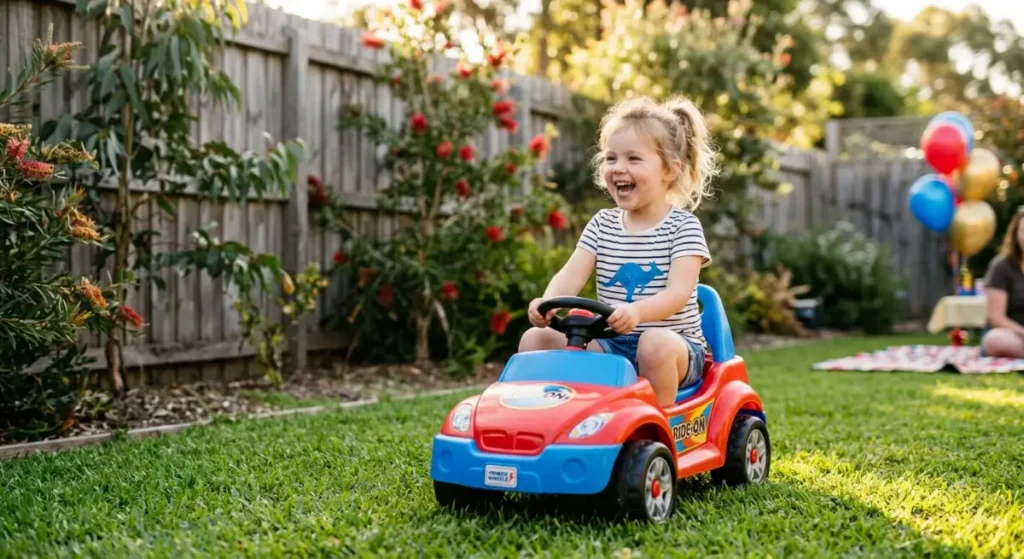
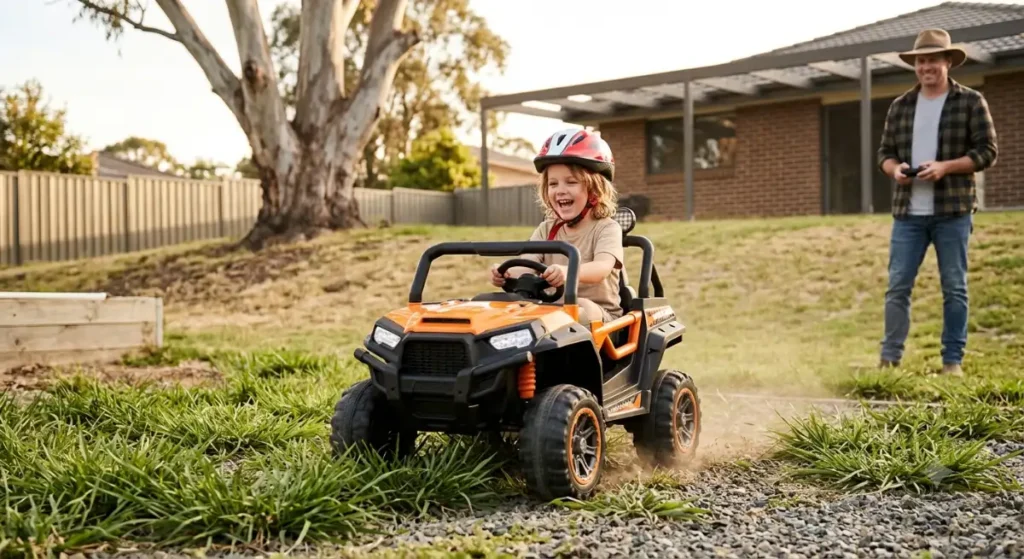
- 12 months to 3 years: this is where baby toys naturally start giving way to toddler gear and where a first ride-on toy tends to show up. Dreamland has a dedicated guide on choosing the right ride-on toy for your little one for exactly this jump.
“You won’t need that bit for a while yet,” he said, nodding at the ride-on toys, but when you do, come back – we’ll sort you out for that stage too.
The Toy That Almost Didn’t Make the Cut
There was one toy – a bright, battery-powered thing with about six different sound effects, that Mum almost grabbed purely because it looked impressive on the shelf. The staff member, to his credit, didn’t push it. “It’s fine,” he said honestly, “but in my experience it’s the kind of thing that’s exciting for about four days and then gets buried under the couch. Totally your call though.”
They put it back. Instead, they walked out with the shape sorter, the push-along dog and a small set of textured balls – nothing flashy, nothing over the top, all of it genuinely built for exactly where their baby was at.
Home By Lunch, and a Very Happy Little Human
By the time they got home and unpacked the bag, the baby was already reaching for the push-along dog before it had even left the box. Ten minutes later, she was on the lounge room floor, banging two textured balls together, absolutely delighted with herself, making a noise that was somewhere between a giggle and a shriek of triumph.
Mum sent a photo to the mum from school pick-up: baby, mid-giggle, dog toy in one hand, ball rolling away in the other. “Worth the drive,” she wrote back. It’s a small moment, in the scheme of things but it’s exactly the moment every parent is chasing when they set out that morning, frustrated by a chewed-up phone charger and a pile of toys that had stopped working their magic.
Grandma came over for a late lunch and got the full performance twice, cheering both times like it was the first time she’d seen it. Dad, meanwhile, quietly went back and read the safety page he’d bookmarked earlier that morning, properly this time, coffee in hand, while the house was calm for once. Small, unremarkable Saturday. But by the end of it, they weren’t guessing anymore about what their baby actually needed, they knew.
What They Learned That Saturday
Nothing about that Saturday was complicated, and that’s kind of the point. The right baby toys aren’t about spending more or buying the most impressive looking option on the shelf – they’re about matching the toy to exactly where your baby is right now, checking it’s genuinely safe, and picking things you’re happy to sit on the floor and play with together.
If you’re a Sydney parent somewhere between Merrylands, Parramatta, or the Inner West, having that same kind of honest, no-pressure conversation is exactly what Dreamland For Kids is there for whether you’re working through your first round of infant toys or you’re a year or two away from your toddler’s first ride-on car or bike. And if you’re not sure what’s next after this stage, the blog has you covered too, from safety checklists for ride-on toys to guides on choosing between tricycles and training wheels further down the track.
Frequently Asked Questions
1. What are the best baby toys for a 9 month old?
Toys that respond to grabbing, shaking or banging like textured balls, shape sorters and push-along toys tend to suit this age best, since babies this age are deep into cause-and-effect learning.
2. Do expensive baby toys work better than simple ones?
Not necessarily. Simple, open-ended toys that a baby has to actively use often hold attention longer than pricier options that do all the work themselves, like lights and sound effects.
3. How can I tell if a toy is genuinely age-appropriate?
Check the packaging for an age label matched to your child and think about whether your baby can actually use it the way it’s designed to be used right now, not in a few months.
4. Are toys with lots of buttons and sounds bad for babies?
They’re not harmful, but many parents find they lose their appeal faster than simpler toys. It comes down to what keeps your particular baby engaged over time.
5. What Australian safety standards apply to baby toys?
Toys for children up to 36 months must meet mandatory standards covering small parts, sharp edges, string length and battery safety, as outlined by NSW consumer protection law.
6. When should I start looking at ride-on toys instead of baby toys?
Most toddlers are ready for a beginner ride-on somewhere between 12 and 18 months, once they’re confidently walking or very close to it.
7. Where in Sydney can I get honest advice on baby toys in person?
Dreamland For Kids, based in Merrylands NSW, offers in-store guidance on age-appropriate toys and ride-on vehicles rather than just pointing you at whatever’s on special.
8. How many toys does a baby actually need at once?
Fewer than most people think. A small, rotating selection tends to hold interest better than a large pile of toys competing for attention all at once.