Currently Empty: $0.00


Electric ride-on toys provide children with a thrilling way to explore new adventures, develop their motor skills, and enjoy active play. These toys combine excitement with learning, encouraging kids to build confidence while having fun.
When selecting the ideal vehicle, it’s crucial to comprehend how the specific Voltage and Speed Setting Ride On Toy configurations influence performance, safety, and suitability for your child’s age and ability. Making the right choice regarding these technical specifications ensures a safer experience and maximises enjoyment every time they take off on their new ride.
Key Insights
- Voltage Directly Impacts Performance and Safety
Understanding voltage options—6V, 12V, 24V, and beyond—is crucial as higher voltage provides more power, faster speeds, and better handling, but also requires greater supervision to keep your child safe. - Adjustable Speed Settings Support Skill Growth
Ride-on toys with low, medium, and high-speed modes let children develop confidence gradually, ensuring younger kids ride at safer speeds while older children can enjoy faster play under supervision. - Match Voltage and Speed to Your Child’s Age and Ability
Choosing the right combination based on your child’s age, size, and riding experience helps maximise safety and fun. Toddlers need slower, lower-voltage toys, while older kids can handle more powerful models designed for outdoor and rough terrains. - Safety Features and Parental Supervision Are Essential
Prioritise ride-ons with seat belts, parental remote controls, and anti-slip tyres, and always supervise children during use. Protective gear like helmets and pads reduces injury risks significantly. - Trust Dreamland For Kids for Expert Guidance and Quality
Dreamland For Kids offers a wide selection of ride-on toys suited to all ages and skill levels. Our knowledgeable team helps you pick a safe and fun ride-on, with convenient online shopping and delivery across Australia.
Table of Contents
What Does Voltage Mean for Ride-On Toys?
Choosing the right ride-on toy for your child means understanding how voltage affects performance and safety. Voltage is the power source that drives the toy’s motor, and it plays a big role in how fast and strong the ride-on toy will be. For parents, knowing the difference between voltage options helps ensure your child gets a toy that matches their age, skill level, and play environment.
- Voltage powers the motor, directly influencing speed and strength.
- Most kids’ ride-on toys come in 6V, 12V, and 24V options.
- Speciality models may offer 36V or 48V for older children or teens.
- Higher voltage means more power, faster speeds, and better handling on rough or uneven surfaces.
Typical Voltage Options and Their Best Uses
| Voltage | Speed Range | Age Range | Best For |
| 6V | 3-5 km/h | 1-3 years | Indoor use, toddlers, smooth surfaces |
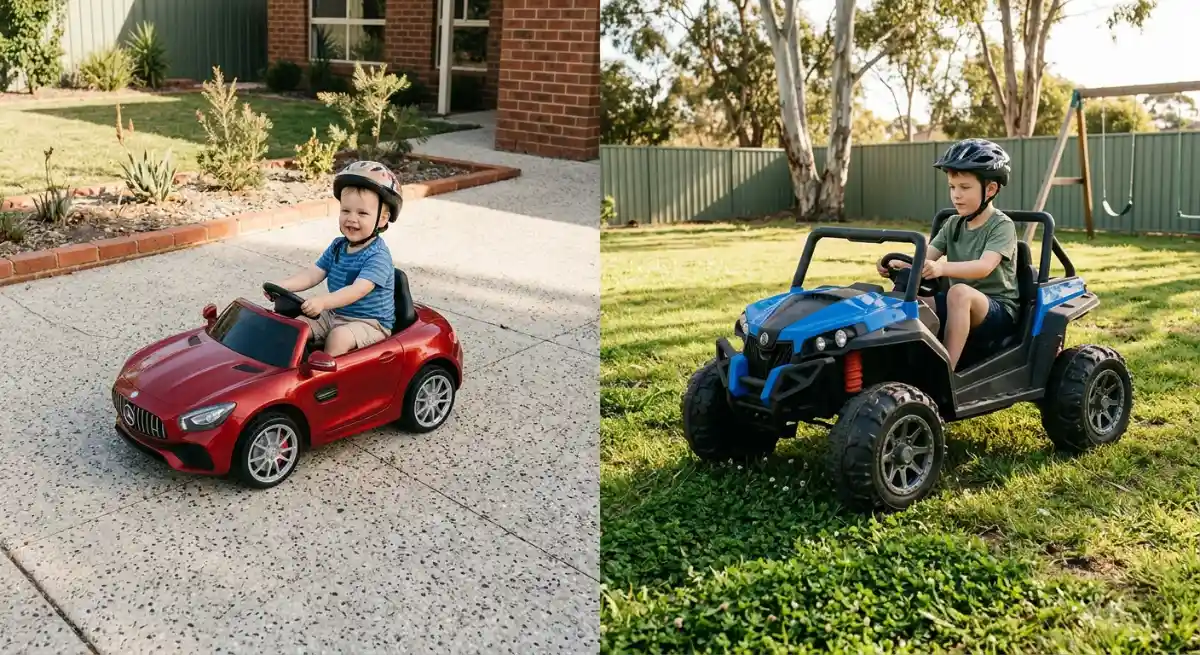
| 12V | 5-10 km/h | 3-6 years | Gardens, pavements, driveways |
| 24V | 8-15 km/h | 5+ years | Outdoor play, rougher terrain |
| 36V+ | 16+ km/h | 8+ years | Large spaces, older children |
Why Speed Settings Matter

Choosing the right speed settings on a ride-on toy is crucial to balance fun and safety. Adjustable speeds allow the toy to grow with your child’s skills and confidence, making playtime both enjoyable and secure.
- Customisable Speed for Comfort: Speed controls let you adjust how fast the ride-on toy goes to suit your child’s current ability and comfort level, ensuring a safe and enjoyable experience as they learn to ride.
- Gradual Skill Development: Many ride-on toys come with low, medium, and high-speed settings, which allow children to gradually increase their speed as they develop confidence and improve their motor skills.
- Safer Speeds for Younger Kids: Slower speeds are perfect for younger children, helping them stay safe while they practise controlling the toy and build essential coordination and balance.
- Higher Speeds with Supervision: Older children can enjoy faster speeds, but it’s important they are supervised and use protective gear like helmets and pads to stay safe during play.
How to Choose the Right Combination for Your Child
Choosing the right combination of voltage and speed in a ride-on toy is essential to provide your child with a safe and enjoyable riding experience. The correct balance ensures the toy matches your child’s age, size, and skill level while offering enough power and speed for fun without compromising safety. Understanding how these two factors work together helps you make a confident choice for your child’s outdoor adventures.
- Consider Your Child’s Age, Size, and Experience: Choose a ride-on toy that suits your child’s current age, size, and riding skills to ensure they can control it comfortably and safely.
- Think About the Riding Environment: Decide where your child will use the toy most—indoors, in the backyard, or off-road—to pick a model designed for those conditions.
- Look for Adjustable Speed Settings: Select toys with adjustable speeds so you can adapt the ride as your child grows and their confidence improves.
- Prioritise Essential Safety Features: Opt for ride-ons with safety elements like seat belts, parental remote controls, and anti-slip tyres to protect your child during play.
Additional Tips for Parents
- Battery playtime typically lasts between 45 minutes and over an hour, depending on the voltage and how the toy is used. Charging usually takes 7 to 12 hours, so plan ahead for playtime.
- Higher voltage ride-on toys provide longer battery life and perform better on rough or uneven terrain. However, due to their increased power and speed, they require close supervision to keep your child safe.
- Always supervise your child while they are using the ride-on toy, regardless of the voltage or speed. Make sure they wear appropriate protective gear such as helmets, knee pads, and elbow pads to minimise injury risks.
- Regularly inspect the ride-on toy for any signs of damage, loose screws, or worn-out parts to ensure it remains safe and reliable.
- Set clear boundaries around where your child can ride, avoiding busy streets, steep hills, or slippery surfaces. Encourage playing in safe areas such as your backyard, parks, or playgrounds.
- Teach your child basic safety rules, such as slowing down near obstacles and stopping when asked.
- Store the ride-on toy indoors or under cover when not in use to protect the battery and parts from weather damage.
- Consider toys with parental remote controls or automatic shut-off features for extra peace of mind during play.
- Keep an eye on battery health and replace batteries as needed to maintain toy performance and safety.
Get the Right Advice and Products at Dreamland For Kids
At Dreamland For Kids, we understand that choosing the perfect ride-on toy can be overwhelming. That’s why our friendly and knowledgeable team is here to help you find the ideal combination of voltage, speed, and features tailored to your child’s age, size, and skill level.

We offer a wide range of high-quality ride-on toys with options for every experience and interest, backed by expert advice to ensure safety and enjoyment. With competitive prices, easy online shopping, and reliable delivery across Australia, Dreamland For Kids is your trusted partner for all your ride-on toy needs.
Choose the Perfect Ride-On Toy for Safe, Endless Fun
Choosing the right voltage and speed for your child’s ride-on toy is vital for a safe and enjoyable experience. Consider your child’s age, confidence, and skills when picking a toy to ensure hours of fun without compromising safety.
Contact our kids’ ride-on toys experts at Dreamland For Kids for personalised advice to find the perfect, safe, and fun ride-on vehicle for your child.
Frequently Asked Questions
What voltage ride-on toy is best for toddlers?
For toddlers aged 1-3 years, a 6V ride-on toy with slower speeds around 3-5 km/h is ideal for safety and easy control on smooth surfaces.
How does voltage affect the speed of ride-on toys?
Higher voltage toys (12V, 24V, or more) provide more power, allowing faster speeds and better ability to handle rough terrain, while lower voltage models are slower and better for younger children.
What speed settings are recommended for different ages?
Younger children should start with slower speeds (2-4 km/h), preschoolers can use medium speeds (4-6 km/h), and older kids may safely enjoy speeds up to 8-15 km/h with supervision.
Are ride-on toys with adjustable speed settings better for kids?
Yes, adjustable speed settings help the toy grow with your child’s skill level, offering safer, more customised play as they build confidence.
What safety features should I look for in a ride-on toy?
Look for seat belts, parental remote controls, anti-slip tyres, and durable construction. Always supervise your child and ensure they wear helmets and protective pads.
How long does it take to charge a ride-on toy battery?
Most batteries take between 7 and 12 hours to fully charge, with playtime lasting from 45 minutes up to over an hour, depending on usage and voltage.
Can higher voltage ride-on toys be used off-road?
Yes, higher voltage toys like 24V and above handle rough terrain better, making them suitable for backyard grass, gravel, and uneven surfaces.
Where can I safely use my child’s ride-on toy in Australia?
Safe riding areas include your backyard, parks, playgrounds, and smooth pavements. Avoid busy streets, steep hills, and slippery or dangerous surfaces.
What’s the best way to maintain a ride-on toy battery?
Store the toy indoors when not in use, charge the battery fully before use, avoid overcharging, and replace batteries when their performance decreases.
Why choose Dreamland For Kids for ride-on toys in NSW and Australia?
Dreamland For Kids offers expert advice, a wide range of voltage and speed options, competitive prices, quality assurance, and convenient delivery Australia-wide, making it the trusted choice for families.